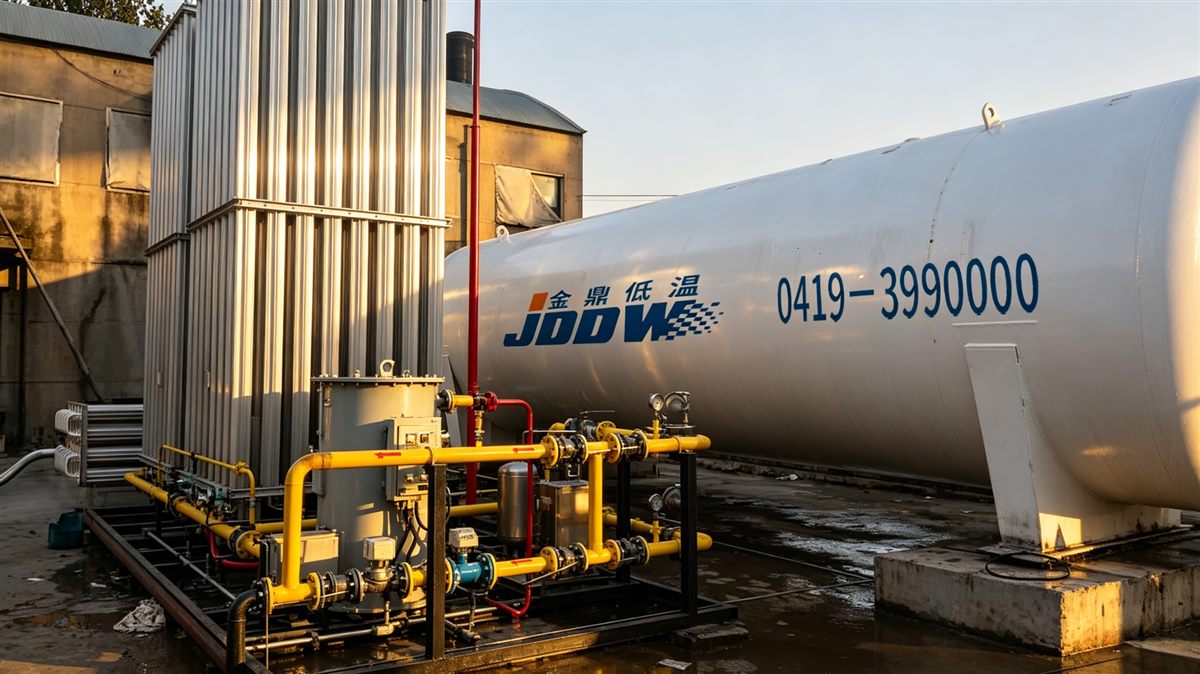
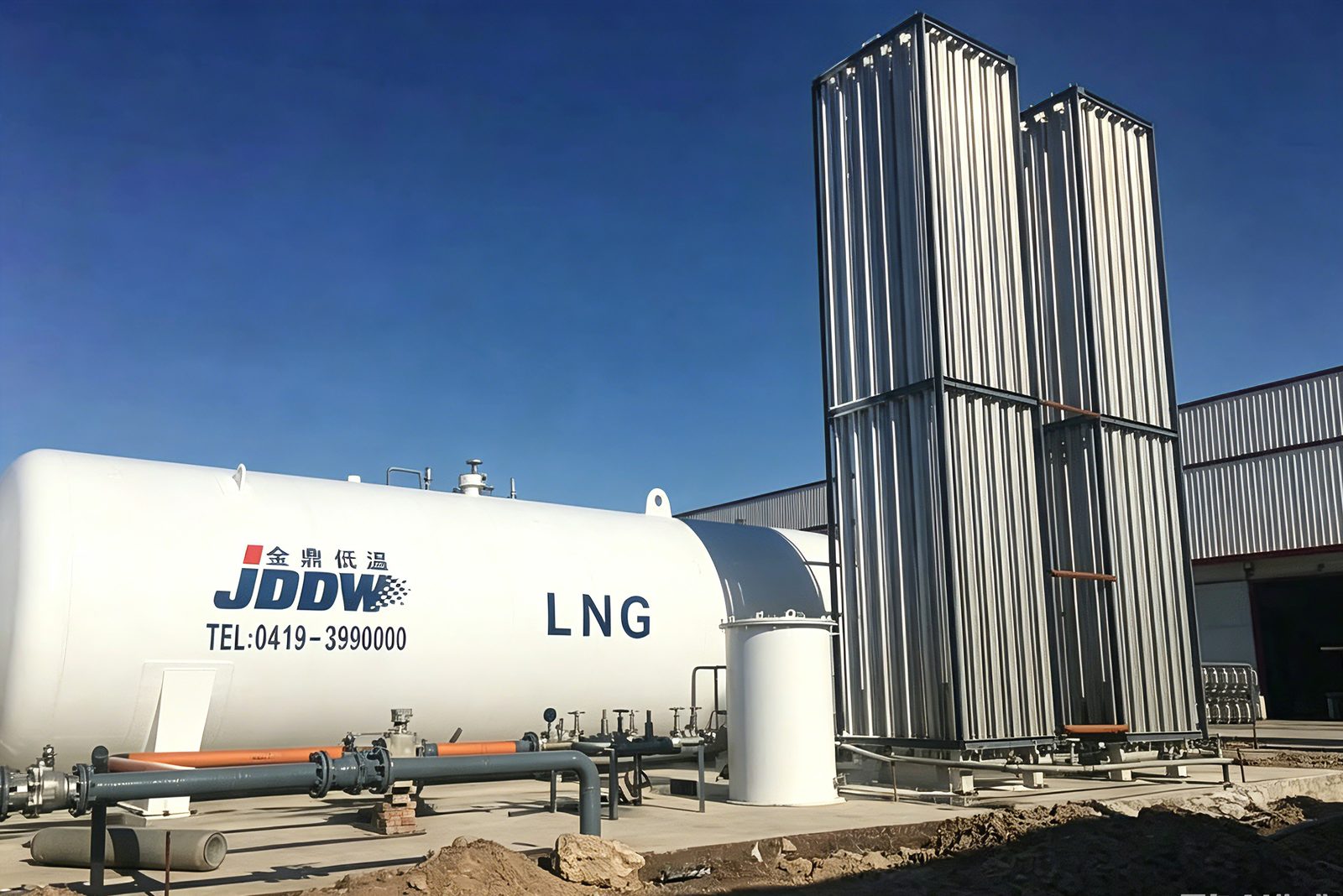
The core function of an LNG storage tank is to store Liquefied Natural Gas (LNG) at -162°C. In urban bus, heavy-duty truck, and long-haul logistics vehicle applications, the storage capacity of a single tank typically ranges from 20 to 150 m³, providing stable gas supply to filling stations. To deeply understand the functional realization and safety requirements of LNG storage tanks, it is necessary to examine their structural composition, selection criteria, and safety inspection requirements.
LNG storage tanks generally adopt a double-layer design, with the inner tank made of low-temperature-resistant 9%Ni steel and the outer tank constructed of reinforced concrete. The space between the inner and outer tanks is filled with insulating materials such as perlite. This structure effectively isolates external thermal influences on the cryogenic liquid, ensuring temperature stability during storage. The selection of the inner tank material is critical; 9%Ni steel can withstand extreme low temperatures of -162°C while maintaining sufficient mechanical strength. The outer tank, supported by the stability of reinforced concrete, provides overall structural support and further enhances the insulation effect.
The selection of LNG storage tanks must be based on storage scale and pressure. Common specifications range from 1 to 200 cubic meters, with working pressures divided into 0.8 MPa and 1.6 MPa tiers. The accompanying LNG storage tanks are typically 30-150 m³ in capacity, with working pressures of 0.6 MPa or 0.8 MPa to meet vehicle refueling needs. Selection considerations also include environmental temperature and the characteristics of the stored medium to ensure the equipment can adapt to actual operating conditions. The determination of specifications directly impacts the storage tank's volume utilization, operating costs, and safety, requiring a comprehensive evaluation based on specific application scenarios.
Safety inspections for LNG storage tanks cover five categories: structural integrity, insulation and cryopreservation performance, leakage and sealing, foundation and settlement, and auxiliary facilities. Structural integrity inspections include testing the strength of the outer tank's concrete, cracks, deformation, as well as corrosion cracks and deformation in the inner tank's wall welds. Insulation and cryopreservation performance inspections focus on the settlement and damage of the interlayer material, thermal insulation performance, and abnormal icing or condensation in the suspended ceiling and insulation layer. Leakage and sealing inspections are conducted through tightness tests of the inner tank's bottom plate wall welds and secondary protective layers, supplemented by trace hydrocarbon gas detection technology. Foundation and settlement inspections monitor the settlement and inclination of the annular foundation, pile foundations, and tank bottom. Auxiliary facilities include pipelines, valves, level gauges, pressure gauges, safety valves, and emergency shut-off systems, all of which must be ensured to function properly.
In practical applications, the system of an LNG storage tank consists of three parts: the inner tank, insulation layer, and outer tank. The interlayer between the inner and outer tanks achieves efficient insulation by filling perlite or aluminum foil, thermal insulation cotton, and creating a vacuum. Key processes include insulation, phase change, pressure establishment, and cold loss, with insulation performance directly affecting the tank's operational stability. A common misconception is that higher vacuum levels are always better for LNG storage tanks. In reality, the vacuum level must be maintained within the design range, as excessively high or low levels can both compromise insulation effectiveness. The correct understanding is that vacuum levels should be regularly monitored to ensure they deviate from the design range by no more than the allowable limit.
During selection, the appropriate volume should be chosen based on storage scale, such as 30-150 m³ tanks for LNG vehicle filling stations. Pressure selection must align with local pipeline pressure and vehicle refueling demands, with 0.8 MPa and 1.6 MPa being common specifications. Regular inspections of insulation performance are necessary to prevent ice formation or air infiltration in the interlayer. Additionally, auxiliary facilities such as safety valves and emergency shut-off systems must remain in good condition to ensure operational safety. Through scientific selection and standardized operation, the efficiency and safety of LNG storage tanks can be effectively improved.
LNG Vehicle Filling Station · Working Principle and Structural Composition of Liquid Oxygen Cryogenic Storage Tanks