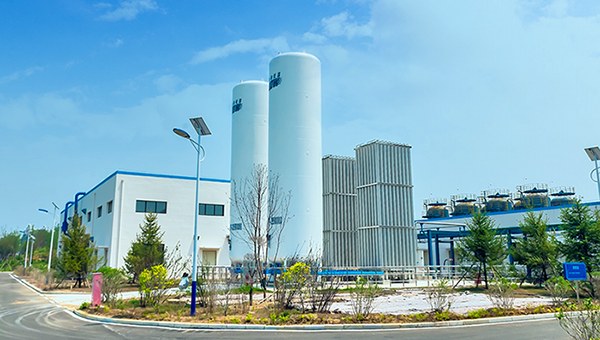
In the industrial gas supply sector, cryogenic liquid storage tanks are core equipment, and their classification directly impacts safe operation and regulatory compliance. These tanks are classified as cryogenic pressure vessels with design temperatures below -20℃.
The determination of cryogenic pressure vessels hinges on design temperature. Regulations specify that carbon steel, low-alloy steel, duplex stainless steel, and ferritic stainless steel containers with design temperatures below -20℃ are defined as cryogenic vessels. This standard also applies to austenitic stainless steel containers, with the critical threshold at -196℃. Design temperature is the core parameter influencing container category and material selection, directly affecting structural design and manufacturing processes.
In practical applications, the classification of cryogenic liquid storage tanks depends on the specific medium and design parameters. For example, Liquid CO₂ Storage Tanks are categorized as second or third-class pressure vessels based on their vacuum insulation characteristics and storage pressure. Liquefied natural gas storage tanks are explicitly classified as third-class pressure vessels, requiring materials (e.g., 06Ni9DR) and manufacturing standards (e.g., non-destructive testing, hydrostatic and pneumatic testing) that meet higher requirements. These cases demonstrate that tank classification is not solely determined by design temperature but also considers medium properties and regulatory demands.
The selection of cryogenic pressure vessels must be based on design temperature to determine material categories. Containers with design temperatures below -20℃ but above -40℃ can use low-alloy steels like 16MnDR; those below -40℃ but above -196℃ require Ni-series cryogenic steels; and those below -196℃ must utilize austenitic stainless steels. All cryogenic pressure vessels must comply with GB/T 18442 series standards, covering material selection, design calculations, manufacturing, and inspection throughout the process.
Special attention must be paid to the effects of low temperatures on material performance. Carbon steel and low-alloy steel transition from ductile to brittle states at low temperatures, significantly reducing impact resistance. Structural optimization (e.g., reducing constraints, avoiding abrupt shape changes) and selecting materials with superior crack arrest properties are essential for enhancing safety. The configuration of safety accessories is critical to prevent failures, such as valve management oversights in the Ertuosi Xilanwei Microalgae Company carbon dioxide asphyxiation incident.
The classification and selection of cryogenic liquid storage tanks must strictly adhere to regulatory standards, with appropriate materials and design parameters chosen based on actual conditions. Scientific selection and standardized manufacturing can effectively ensure equipment safety and stable operation. For custom non-standard pressure vessels, click here for details.