
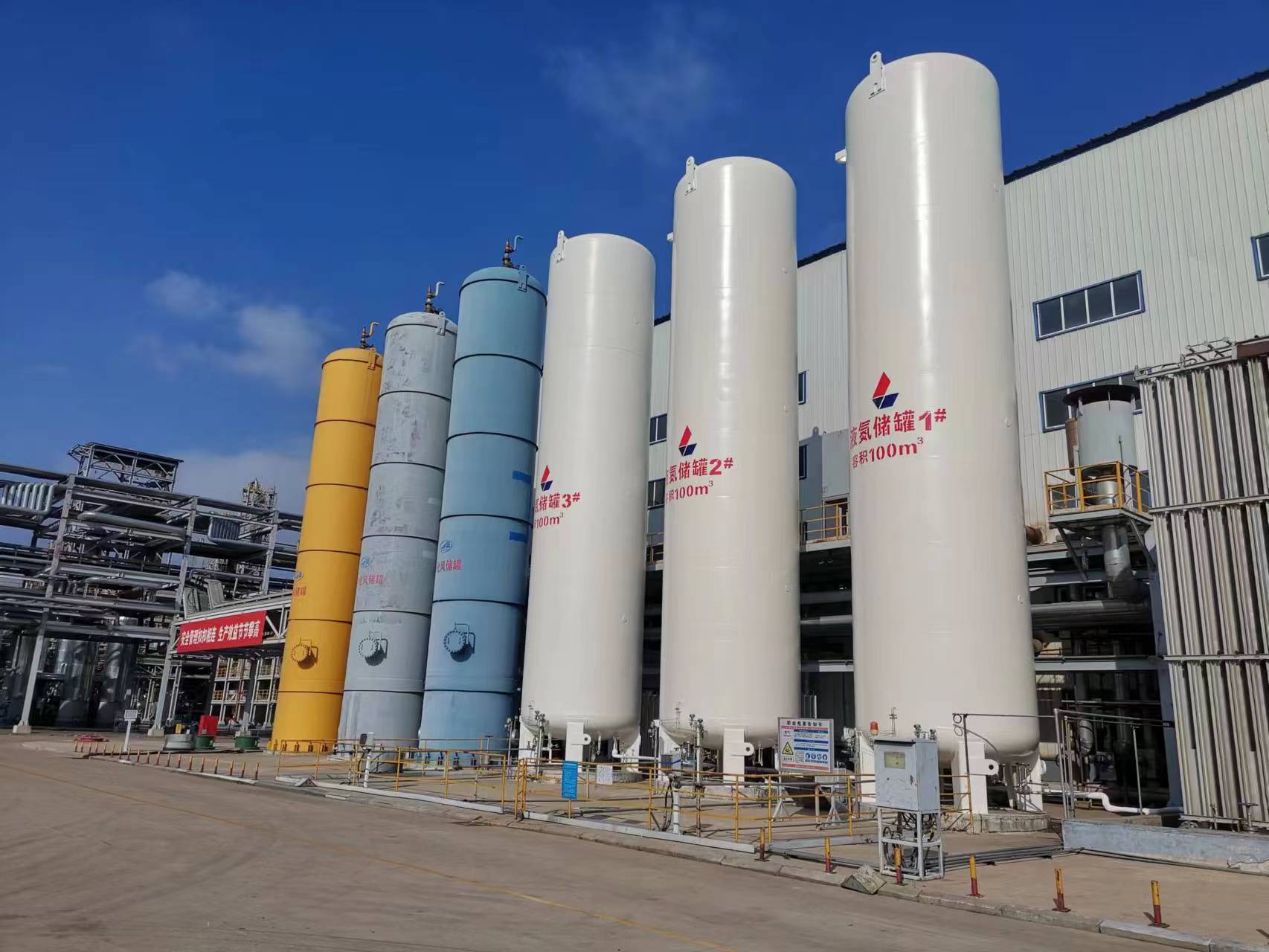
In applications such as LNG vehicle refueling stations, single tank storage capacity typically ranges from 20 to 150 cubic meters, providing fuel for urban buses, heavy-duty trucks, and long-haul logistics vehicles. The level control of LNG storage tanks must strictly comply with regulations and standards to ensure safe and compliant storage processes.
As specialized equipment for storing Liquefied Natural Gas, LNG storage tanks must comply with Class III pressure vessel regulations. According to the full text of "LNG Storage Tank is Special Equipment for Storing Liquefied Natural Gas," these tanks must be manufactured from 06Ni9DR material and undergo ultrasonic testing, hydrostatic and pneumatic pressure tests, as well as inspection and certification by technical supervision authorities. Additionally, the design must follow standards such as GB/T 26978 "Design and Construction of On-site Assembled Vertical Cylindrical Flat-bottom Steel Low-Temperature Liquefied Gas Storage Tanks" to ensure structural integrity, insulation and cryogenic preservation performance, leakage and sealing performance, foundation and settlement stability, and the reliability of auxiliary facilities.
Liquefied Natural Gas has a normal temperature of approximately -160°C (as stated in the technical characteristics section, around -162°C). Storage tanks must possess strong low-temperature resistance and insulation capabilities. Due to their large capacity and no need for cooling equipment, they are often referred to as "super cold storage." According to the full text of "LNG Storage Tank is Special Equipment for Storing Liquefied Natural Gas," the inner vessel material adopts 9% nickel steel (06Ni9DR), which maintains good toughness and high strength at extremely low temperatures of -196°C, meeting the stringent requirements of Liquefied Natural Gas storage. Meanwhile, the vacuum powder insulation method effectively reduces evaporation loss, ensuring storage efficiency.
LNG storage tanks are divided into atmospheric pressure tanks and high-pressure tanks based on storage scale and pressure. According to the full text of "LNG Storage Tank is Special Equipment for Storing Liquefied Natural Gas," atmospheric pressure tanks are commonly used in large-scale storage scenarios such as receiving stations, while high-pressure tanks are frequently found in tanker transport or gas supply stations. The structural form must meet corresponding requirements. For example, LNG storage tanks with a capacity of 30-150 cubic meters often adopt vertical or horizontal designs to accommodate different storage scales and pressure conditions. The main structure of the equipment includes the inner tank, outer shell, and insulation layer. Single-container tanks consist of a steel inner tank with an insulated outer shell, while double-container tanks are composed of an inner tank and an outer tank, with insulation placed between them.
In actual operation, the level control of LNG storage tanks must comprehensively consider regulations and standards, medium characteristics, and structural requirements. When selecting equipment, standards such as GB/T 20368-2021 "Liquefied Natural Gas Production, Storage and Transportation" should be followed to ensure that parameters such as tank material, design temperature, and working pressure meet design conditions. During operation, regular inspections of structural integrity, insulation performance, leakage conditions, and foundation settlement must be conducted to ensure the equipment remains in a safe operating state. Through scientifically sound and reasonable level control, the service life of the equipment can be extended, operating costs reduced, and the safety of Liquefied Natural Gas supply supported.