
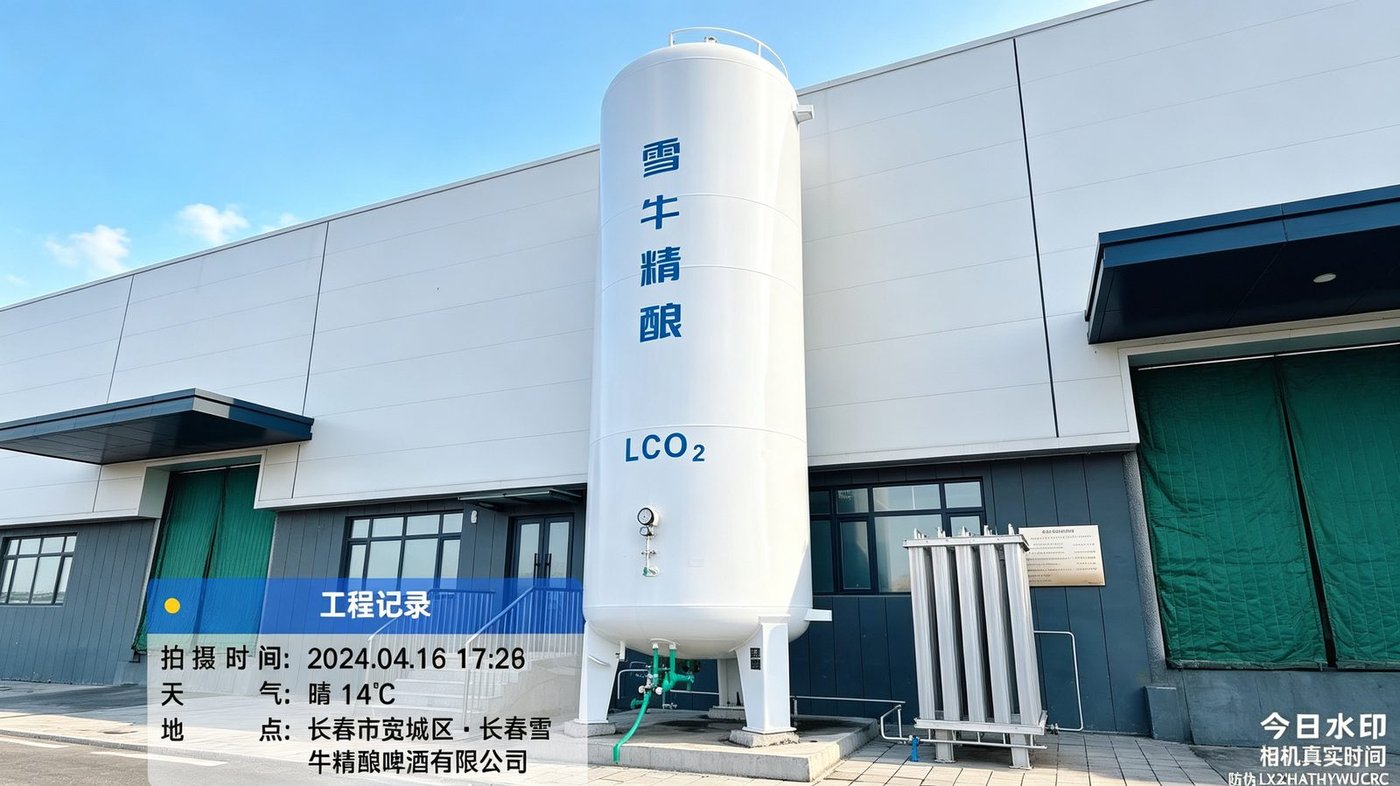
In dry ice production plants or greenhouse applications, 10-30m³ food-grade CO₂ storage tanks are commonly used for centralized gas supply. Determining the safe distance for these tanks is not a simple lookup task, but requires comprehensive consideration of tank volume and complex surrounding facility factors.
Liquid carbon dioxide storage tanks are classified as pressure vessels for storing cryogenic liquid carbon dioxide. Based on design volume and working pressure, they are categorized as Class II or Class III. Manufacturing and acceptance must strictly follow GB/T 18442-2011 "Fixed Vacuum Insulated Cryogenic Pressure Vessels" and TSG 21-2016 "Technical Supervision Regulation for Fixed Pressure Vessels Safety". Manufacturers must possess A2-level pressure vessel design and manufacturing qualifications.
Storage tanks pose risks such as leakage, asphyxiation, and explosion. The Eerduos Xilan Microalgae Company accident demonstrated that ineffective isolation of pipelines could lead to gas entering water bodies causing asphyxiation. The Hangzhou "11.13" explosion originated from low-temperature brittleness cracking established to leakage and pressure surge. During maintenance, frozen valves must be thawed with nitrogen or 70~80℃ hot water, and open flames are strictly prohibited. Hot repairs are forbidden when liquid exists in the tank. Safety valves must be made of stainless steel or copper and require strict oil removal.
Storage tanks must be effectively isolated from flammable gas facilities to prevent mutual accident impact. Transportation and handling should be handled gently to prevent tank shell and accessory damage. After the expiration of the use life indicated on the packaging, the tank must be inspected and certified before continued use. During transportation, storage, and use of gas-filled tanks, they must be classified and stacked, and flammable gases must not be stored together with oxidizing gases. In practical applications, determining safe distances often hinges on two key aspects: "identifying surrounding facilities" and "implementing isolation measures". Key points include: clearly defining regulatory requirements for tank volume and surrounding facilities classification; strictly adhering to maintenance and operation standards to avoid accidents caused by operational errors. Common errors include placing storage tanks too close to oxidizing gas facilities or failing to properly isolate pipelines according to regulations, established to accident escalation.
When selecting storage tanks, specific operating conditions and surrounding environments should be considered to ensure distances comply with design specifications. During use, regular inspections of safety accessories (such as "combination, safety system valves") must be conducted, and all operations must comply with standards such as GB/T 18442-2011. For food-grade CO₂ storage tanks, compliance with GB 1886.228-2016 mandatory requirements is also required.
Liquid Carbon Dioxide Storage Tank · Dry Ice Cleaning and Stage Fog