
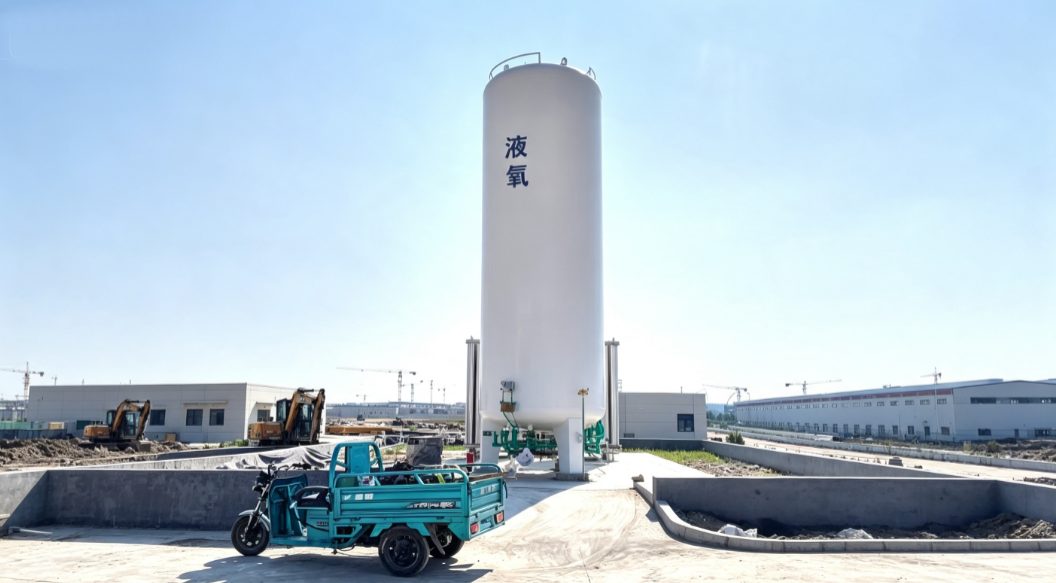
The selection of a liquid oxygen storage tank level sensor must be based on specific application conditions, equipment parameters, and safety standards. This process directly determines the stable operation and safety of the oxygen supply system, especially in critical applications such as medical and municipal environments.
In medical center oxygen supply systems, the liquid oxygen storage tank serves as the main gas source, providing continuous and stable medical oxygen to wards, operating rooms, ICUs, and other hospital areas. Liquid level monitoring must be real-time and precise, ensuring the liquid oxygen level in the tank remains within a reasonable range to avoid supply interruptions due to low levels. This type of system requires high response speed and accuracy from the level sensor, equipped with instruments to display real-time level changes and paired with automatic alarm or replenishment devices to guarantee 24/7 uninterrupted oxygen supply.
In contrast, municipal water supply systems use liquid oxygen stations primarily for ozone disinfection processes, with more flexible oxygen usage requirements. Liquid level monitoring in these applications focuses more on pressure-linked control strategies, automatically adjusting inlet or vaporization amounts based on set level limits and pressure changes to ensure stable raw material supply for ozone generators. This type of application has relatively lower precision requirements for the level sensor but needs excellent pressure resistance and stable signal output to adapt to the complex conditions of municipal water supply.
The operating procedures for liquid oxygen storage tanks directly impact the selection requirements for level sensors. During pressurized filling, the internal pressure of the tank is high, and the level sensor must have corresponding pressure resistance to prevent damage or inaccurate readings due to pressure fluctuations. At the same time, pressure gauges must be monitored throughout the filling process, and excessive pressure should be relieved promptly through safety valves or vent valves. The level sensor should accurately reflect level changes, providing reliable data support for operators.
The first filling operation is more complex and requires strict adherence to a specific sequence: first, purge moisture and dust from the filling pipeline, then open the vent valve, fill valve, upper and lower level gauge valves, and upper inlet valve, filling slowly from the top. After stable venting from the vent valve, the filling speed can be appropriately increased and the balance valve closed. Once the level gauge shows a reading, the lower inlet valve can be opened, and the filling method adjusted based on the level. Liquid flowing from the fill valve indicates the tank is full, at which point all inlet valves and related valves should be closed. These operational steps place higher demands on the response speed, pressure resistance, and sealing performance of the level sensor, requiring thorough consideration during selection.
The selection of a liquid oxygen storage tank level sensor must comprehensively consider application scenarios, operating procedures, and equipment parameters. When selecting, first clarify boundary conditions such as purpose, medium, usage, location, power supply, and gas supply. Then, determine the capability range based on the tank's geometric volume, working pressure, and design temperature. Finally, specify requirements for the sensor's pressure resistance and response speed based on operating procedures. The final selection should meet design conditions and comply with relevant safety standards to ensure the safe and stable operation of the liquid oxygen storage tank.
Liquid Oxygen Storage Tank · Medical Center Oxygen Supply · Liquid Oxygen Storage Tank Shipped to a Steel Plant in Northeast China