Many customers inquire about low-temperature storage tanks, with a primary concern being evaporation loss, which refers to the gradual vaporization of liquid oxygen, liquid nitrogen, and liquid argon inside the tank, leading to pressure rise and automatic pressure relief. To understand the loss, one must first comprehend the vacuum insulation structure of low-temperature storage tanks.
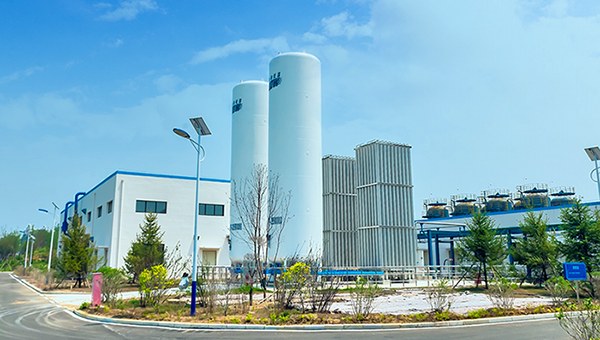
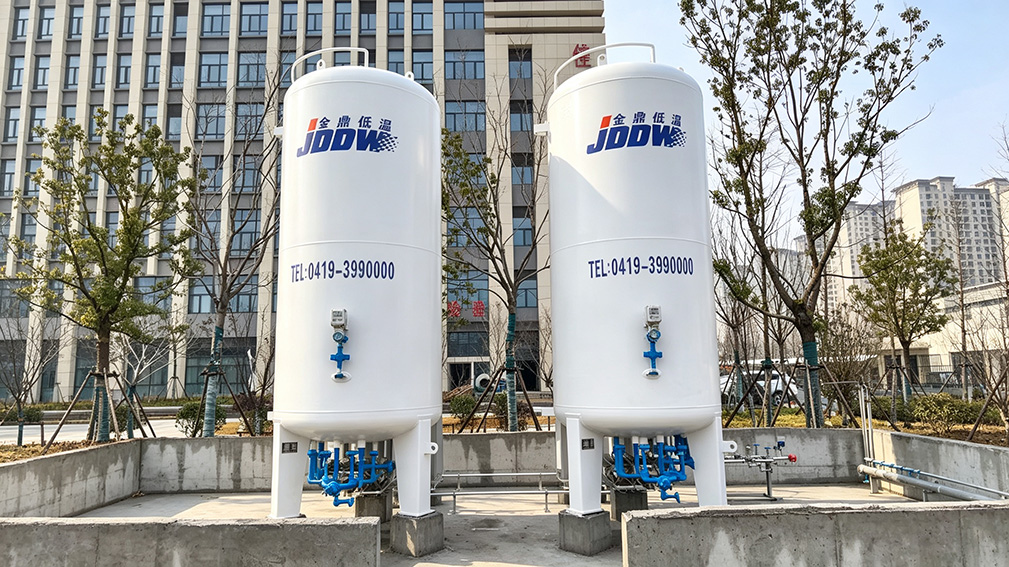
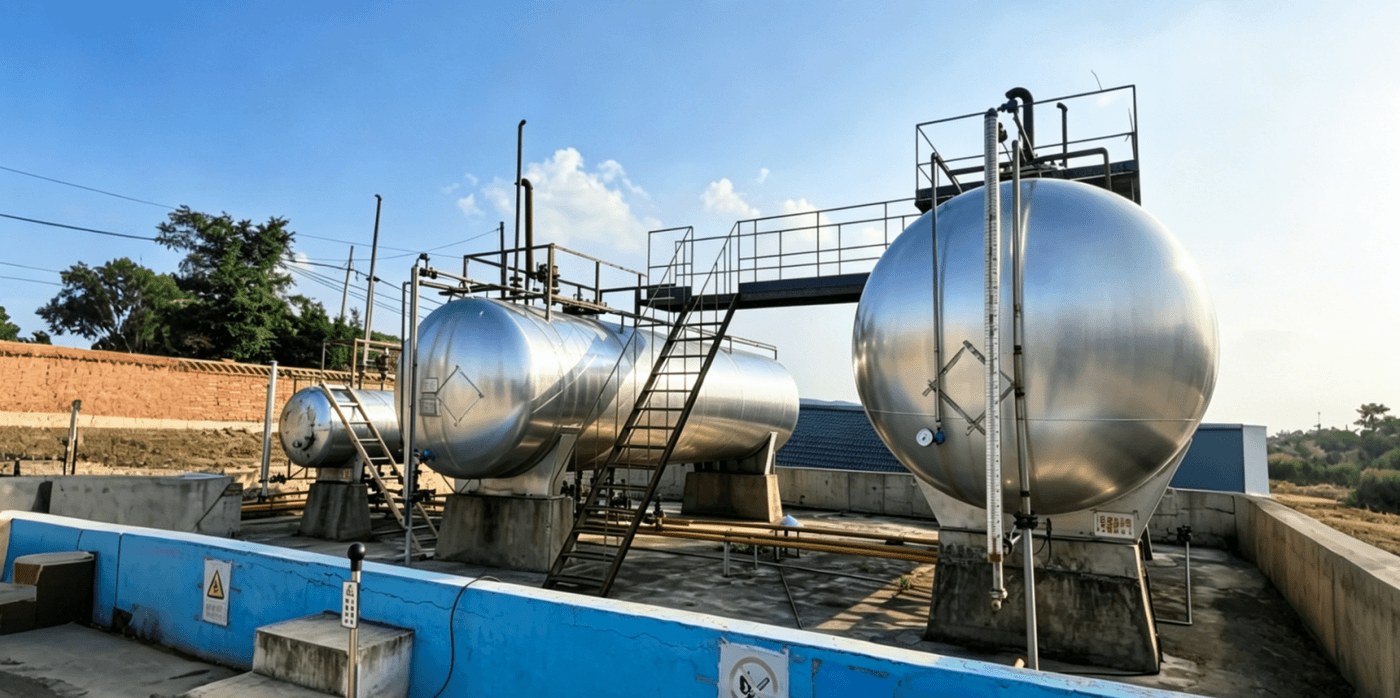
Liquid oxygen tanks, liquid nitrogen tanks, and liquid argon tanks all belong to double-walled vacuum insulated pressure vessels, consisting of an inner tank and an outer tank. The inner tank directly stores the cryogenic liquids, while the outer tank serves as a protective casing. The space between the two layers is evacuated to a high vacuum and filled with multi-layer insulation materials to isolate external heat conduction, reducing heat entry into the tank and thereby slowing the rate of liquid vaporization.
The vacuum layer is the core of the insulation. If the vacuum level in the layer declines, insulation fails, resulting in a noticeable increase in daily evaporation, higher frequency of pressure relief, and increased gas loss. Standard low-temperature storage tanks undergo vacuum testing and static tests before leaving the factory. After delivery, proper usage is also essential to avoid tank body collisions and damage to the external insulation layer, preventing vacuum failure.
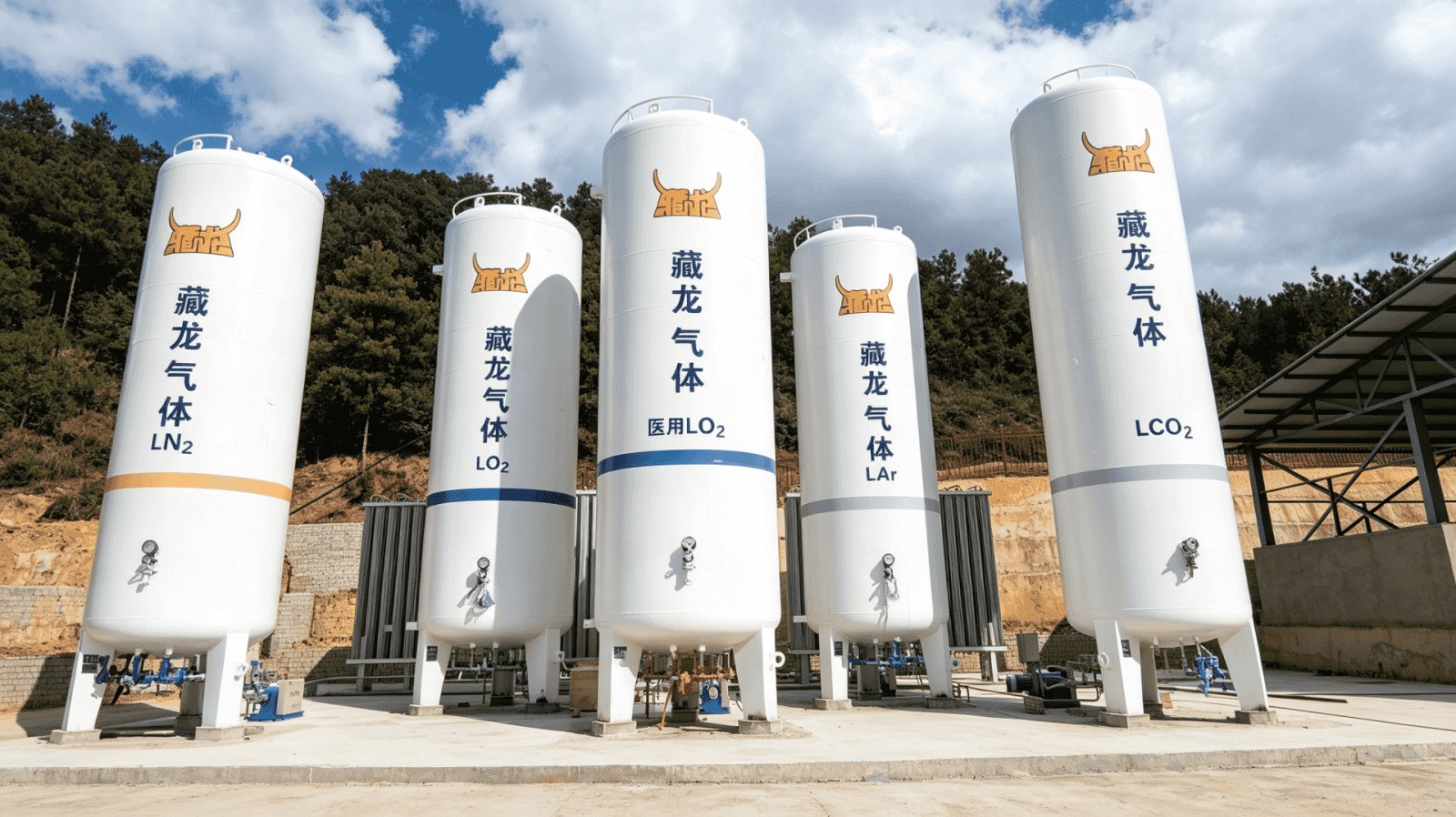
Different media tanks have varying standards for evaporation indicators. Liquid nitrogen, being colder, requires stricter vacuum insulation. Liquid oxygen tanks, in addition to insulation, must strictly control internal cleanliness to eliminate oils and flammable substances. Liquid argon tanks prioritize balancing structural load-bearing and insulation equilibrium. In daily management, maintain the tank pressure within the design range, avoid overpressure operation, regularly check liquid level and pressure records, and contact the manufacturer promptly for inspection upon detecting anomalies.
Besides the tank itself, the insulation treatment of auxiliary pipelines, vaporizers, and valves also affects loss. If pipeline insulation fails, cryogenic liquids vaporize prematurely in the pipelines, causing unnecessary loss. Low-temperature storage tanks for liquid oxygen, liquid nitrogen, and liquid argon, as well as LNG and carbon dioxide tanks produced by Liaoyang Jindeng Low-Temperature Equipment, undergo vacuum testing and hydrostatic pressure tests before leaving the factory. They are accompanied by vaporizers and complete gas supply equipment, with post-sale inspection, maintenance, and technical support provided.
It is reminded that low-temperature storage tanks are classified as special equipment. Operators must be familiar with safety procedures, conduct regular inspections, and perform daily maintenance to ensure stable tank operation and control evaporation loss.