
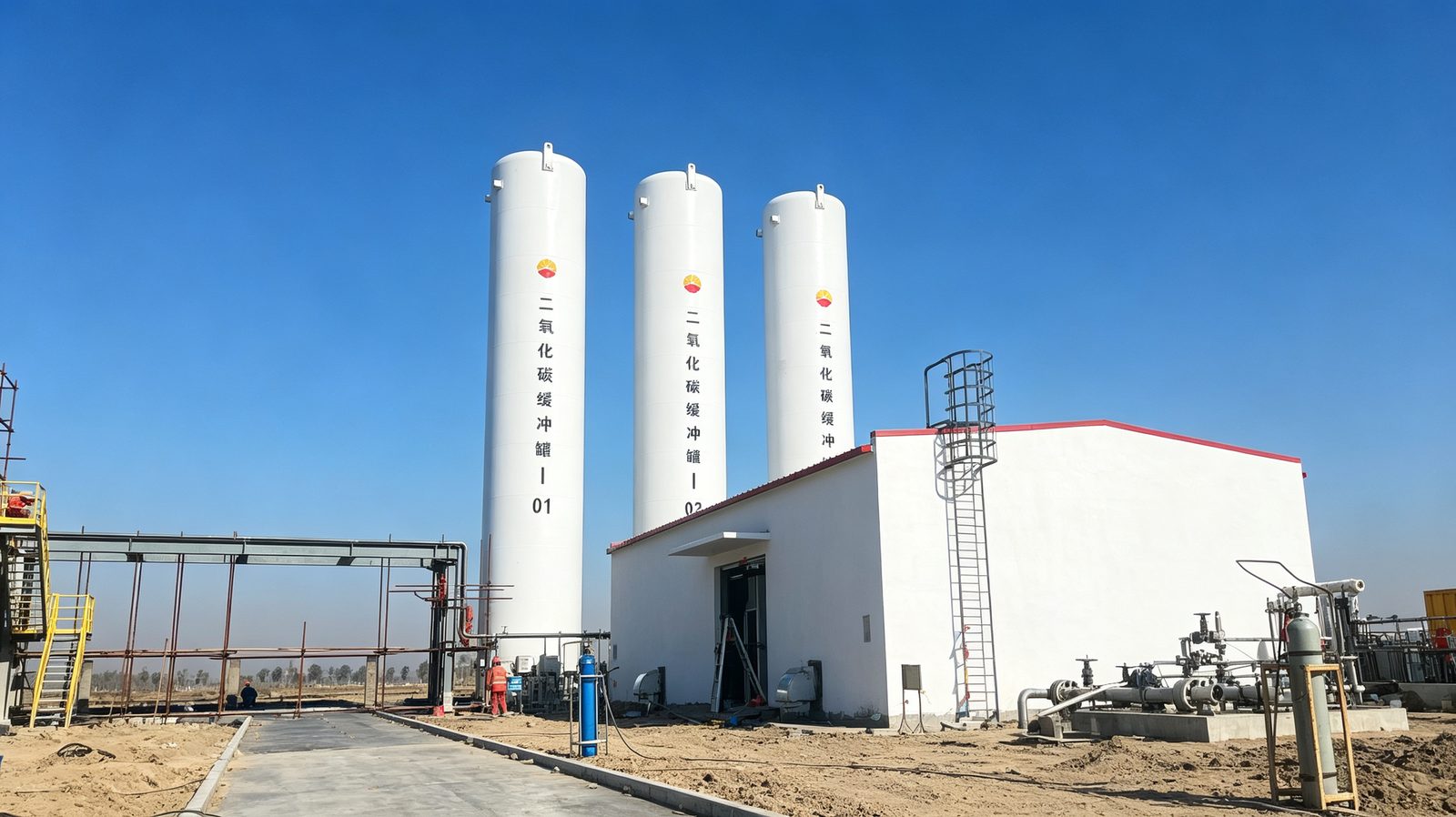
Pressure management for liquid carbon dioxide storage tanks is critical for dry ice production facilities, greenhouse structures, and stage fog systems. Typically, the normal working pressure of such tanks is determined by their design pressure, with common values reaching 2.0MPa or higher, a parameter directly influencing equipment selection and operational safety.
The design pressure of liquid carbon dioxide storage tanks represents the highest pressure they can withstand, established based on application scenarios and regulatory requirements. According to the "Fixed Vacuum Insulated Cryogenic Pressure Vessels" standard, the design pressure for these tanks generally exceeds 2.0MPa, with special cases reaching 2.3MPa. For example, Liaoyang Jinding Cryogenic's 10-30m³ food-grade CO₂ storage tanks often have a design pressure of 2.16MPa or 2.2MPa, with the maximum working pressure limited to 2.2MPa. Such design ensures safety under extreme conditions.
The actual working pressure of storage tanks varies with temperature and liquid saturation levels. As ambient temperature rises, increased CO₂ vaporization leads to higher pressure, while low temperatures result in pressure reduction. Under any circumstances, the working pressure must remain within the design range. For CO₂ storage tanks, the design temperature range is -40°C, corresponding to saturation pressure that determines the equipment's pressure resistance. Operators must monitor CO₂ concentration in real time to prevent ineffective CO₂ release due to excessively low pressure.
To guarantee safety, liquid carbon dioxide storage tanks must be equipped with pressure monitoring and relief devices. According to the "Safety Supervision Regulation for Fixed Pressure Vessels," pressure must be monitored during storage, with overpressure strictly prohibited. When pressure exceeds the set threshold (e.g., 2.1MPa), the vent valve should automatically activate for pressure reduction, though the inner tank pressure must not fall below 0.8MPa to prevent CO₂ from sublimating into dry ice, affecting subsequent use. Additionally, these tanks are classified as second or third-class pressure vessels, requiring periodic radiographic testing and hydrostatic testing (typically at 2.53MPa) to ensure structural integrity.
Proper selection and use of liquid carbon dioxide storage tanks require: first, clarifying operational needs such as storage capacity (1m³ to 200m³), working temperature (-40°C), and pressure grade (2.0MPa or higher); second, choosing suitable equipment based on applications—dry ice cleaning requires a self-pressurizing vaporizer, while agricultural gas fertilization demands dose-release valve groups; third, strictly adhering to operating procedures, conducting regular inspections of safety components to ensure long-term stable performance.
Liquid Carbon Dioxide Storage Tank · Dry Ice Cleaning & Stage Fog Systems