
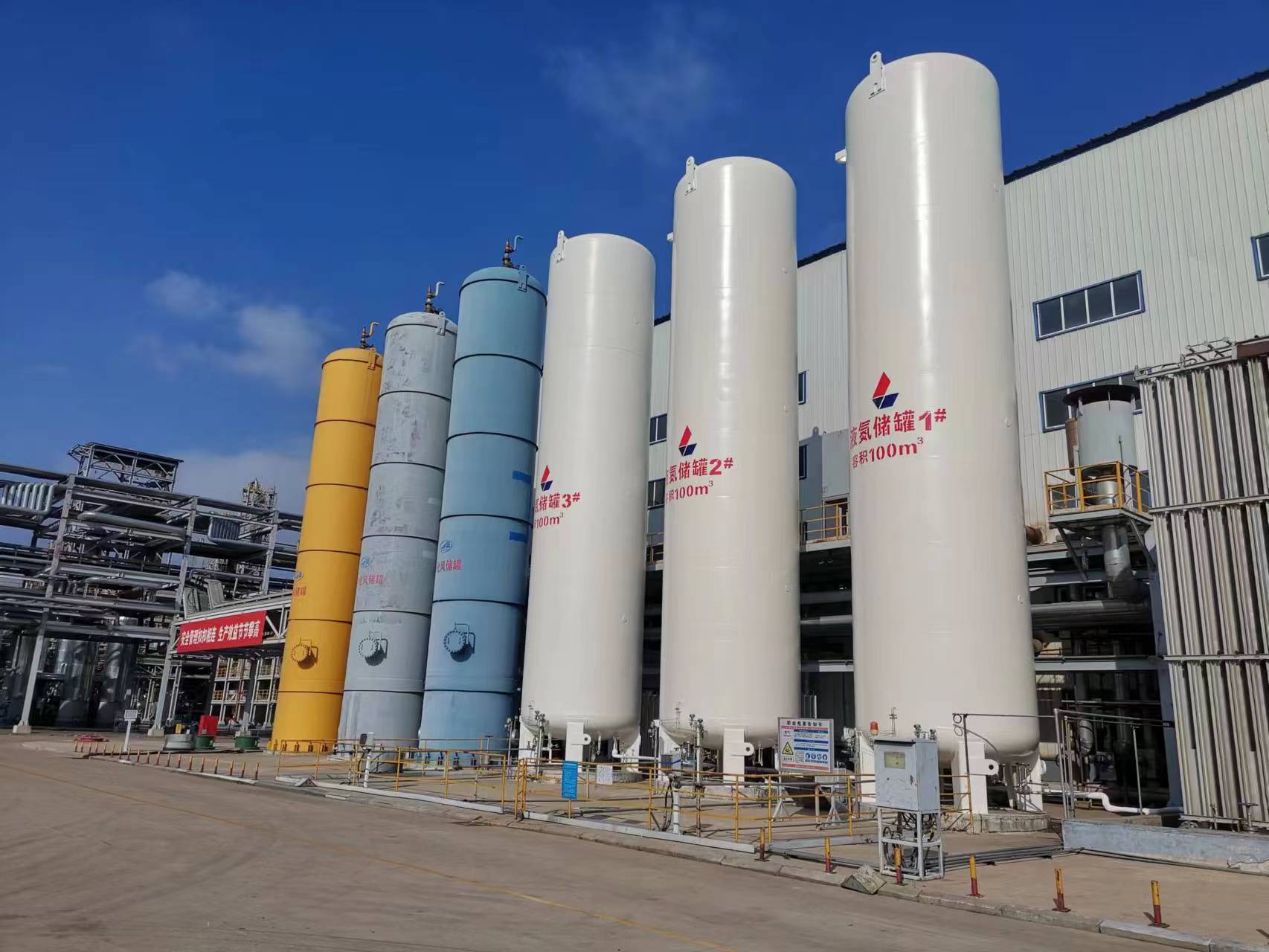
Cryogenic storage tanks play a critical role in stable operation within industrial settings like central gas supply stations. Immediate corrective actions must be taken when abnormal conditions such as unusual liquid level fluctuations or sudden pressure surges occur. Troubleshooting storage tank issues requires a combination of equipment parameters and operational characteristics to ensure safety and efficiency.
The structural design of storage tanks directly impacts the probability and type of faults that may occur. Improper material selection or substandard weld quality can lead to cracks or sealing failures under low-temperature conditions, resulting in leaks or abnormal liquid levels. During the selection phase, rigorous review of material low-temperature resistance performance and manufacturing processes is essential. For example, ambient air vaporizers (parameters: working pressure 0.8~3.5MPa) with novel aluminum alloy star-shaped fin arrays have heat exchange efficiency closely related to ambient temperature. Design flaws may cause thermal stress exceeding limits in storage tanks.
Operational attention should be paid to whether the vacuum level deviates from the design range. When filling liquid nitrogen (LN₂) for the first time, if the ambient temperature drops abruptly, the tank shell may develop stress concentration due to uneven thermal expansion and contraction. In such cases, first close the inlet and outlet valves, then gradually release pressure through a relief valve to prevent instantaneous stress changes from causing tank deformation. After handling, retest the vacuum level to ensure it returns to the rated parameters.
The heat exchange efficiency of vaporizers determines the frequency of abnormal cryogenic liquid vaporization. Ambient air vaporizers utilize environmental air as a heat source. If the heat exchange area is insufficient or star-shaped fins are heavily frosted, it will lead to insufficient gasification capacity, causing continuous liquid level rise in storage tanks. Monitoring outlet temperature (≥ ambient temperature-10℃) and gasification rate can identify issues. For instance, when the outlet temperature significantly drops below the design value, first check if the ambient temperature is below 10℃, then clean the heat exchange fins.
During on-site assessment, first check the pressure gauge reading. If the pressure exceeds limits (e.g., above 3.5MPa), rule out vaporizer faults and focus on inspecting the pipeline or storage tank itself. If pressure is normal, then measure outlet temperature and liquid level. If the liquid level continues to rise, the issue may lie with vaporizer efficiency. The handling sequence is: first shut down the standby vaporizer (if one primary and one standby), then perform frost removal or maintenance on the faulty equipment, and finally retest the outlet temperature.
Pressure fluctuations outside the design range (0.8~3.5MPa) inevitably pose safety risks to storage tanks. During pipeline maintenance, if relief unit valves (one primary and one standby) are not adjusted in time, it may cause sudden pipeline pressure rises, overloading the storage tanks. Checking independent meter readings at each user end can determine if localized blockages or leaks exist. If readings are abnormal, trace the pipeline for inspection.
During handling, first isolate the faulty area, close relevant valves, then gradually relieve pressure. For example, if a user’s meter reading remains zero, valve jamming or pipeline rupture may be suspected. First reduce pressure below 0.8MPa, then dispatch personnel for inspection. After completion, retest pipeline pressure to ensure it falls within the design range.