
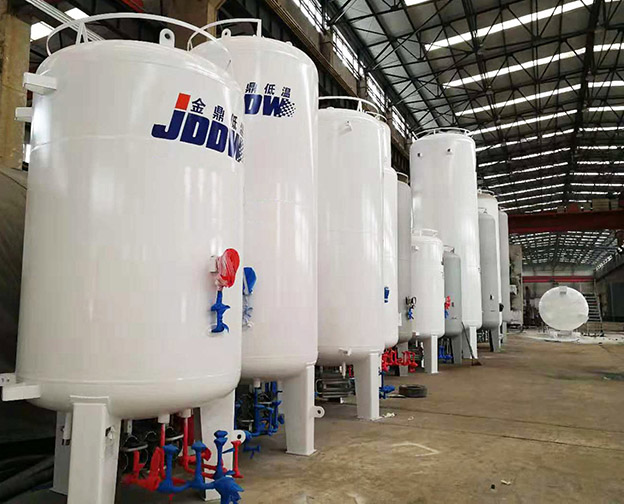
Safe operation of cryogenic liquid tanks is essential for industrial & scientific applications. Liaoyang Jinding Cryogenic provides a systematic guide on operation protocols & precautions to minimize risks, extend equipment life, and comply with safety standards.
Regular inspections of cryogenic liquid tanks should cover exterior condition, valve status, and level monitoring. Visual checks must confirm no corrosion, cracks, or deformation, and valves must be leak-tight. Level monitoring should use dedicated measuring tools to prevent overfilling or emptying hazards.
Maintenance involves cleaning the tank interior to avoid residue affecting performance. For long-term storage, execute specific maintenance plans, including media draining, insulation layer inspection, and pre-start pressure testing. Refer to Cryogenic Tank Inspection Projects & Qualification Standards for systematic evaluations.
Before activating cryogenic liquid tanks, comprehensive preparation is required. First, verify material compatibility with the stored medium (e.g., liquid nitrogen) and ensure operating temperatures are within limits. Next, inspect all connections, valves, and safety accessories, especially quick-connect fittings for cryogenic liquids.
Operators must be professionally trained and familiar with emergency procedures. Ensure adequate ventilation in storage areas to prevent frostbite from low-temperature zones caused by vaporization. For large tanks, confirm the accuracy of instruments like level and pressure gauges.
Continuous monitoring is crucial during operation. Focus on level, pressure, and temperature fluctuations, as anomalies may indicate leaks or failures. For liquid nitrogen tanks, pay special attention to vaporization increases due to ambient temperature rises, preventing overpressure.
Emergency response must follow "isolate first, then address" principles. If a leak is detected, immediately close relevant valves, evacuate personnel to safe zones, and use dry ice or insulation to control the leak point. For large leaks, initiate fire protection systems or contact professional rescue teams. All actions must adhere to Non-Standard Pressure Vessels safety parameters.
Cryogenic liquid tanks serve diverse applications, requiring adjusted operations. In Electronic Component Testing, tanks must maintain ultra-low temperatures for extreme environment simulation, demanding high precision in temperature control. In Metal Cryogenic Assembly, stability in media supply and rapid vaporization are prioritized.
Customized tank dimensions and configurations are possible for different conditions. For LNG vaporizer stations, match tanks with vaporizers and manage return flow rates. Related processes can be found in LNG Vaporization Station Process Flow & Key Equipment Configuration to ensure system efficiency and safety.