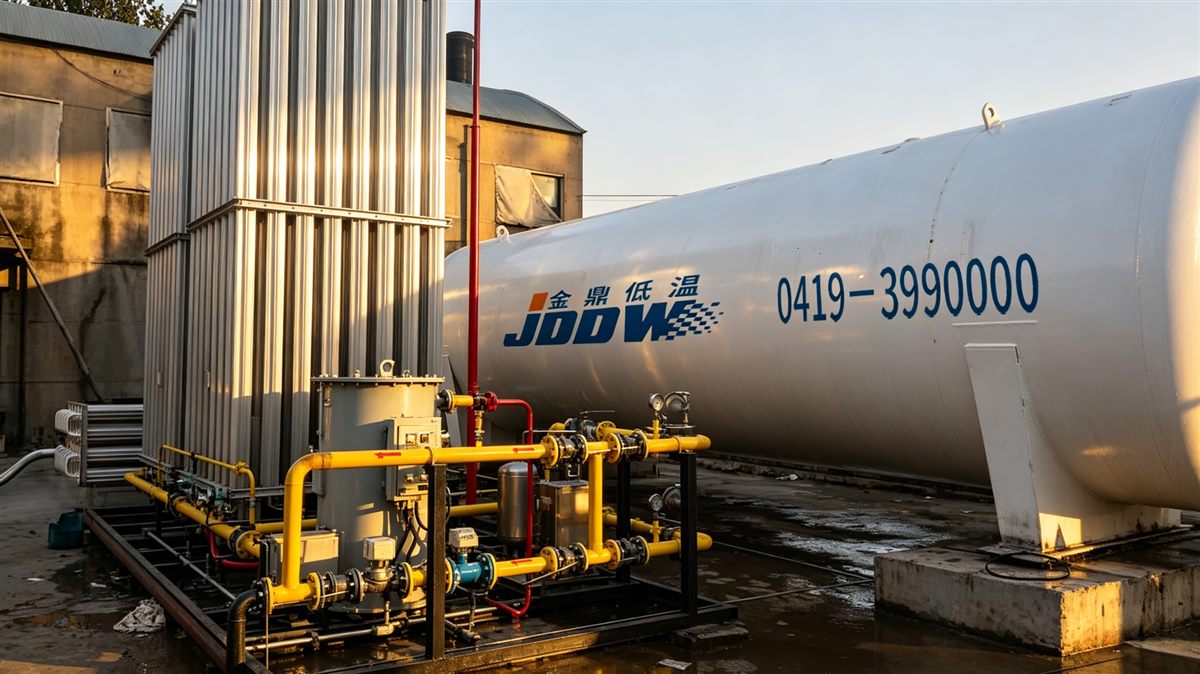
Although both LNG tanks and liquid oxygen tanks are cryogenic insulated pressure vessels, they differ significantly in medium properties, design parameters and supporting systems:
LNG (liquefied natural gas) is mainly methane, flammable and explosive, belonging to Class A fire hazard medium; liquid oxygen is a strong combustion-supporting gas, not flammable itself but strongly supports combustion.
Their boiling points are -162℃ (LNG) and -183℃ (liquid oxygen), and the design temperature of both is considered as -196℃.
LNG tanks must be equipped with combustible gas detection, emergency shutdown and flare systems; liquid oxygen tanks require strict grease management, and all valves and pipe fittings must be degreased.
Both adopt double-layer vacuum powder insulation structure to ensure low evaporation rate during long-term storage.