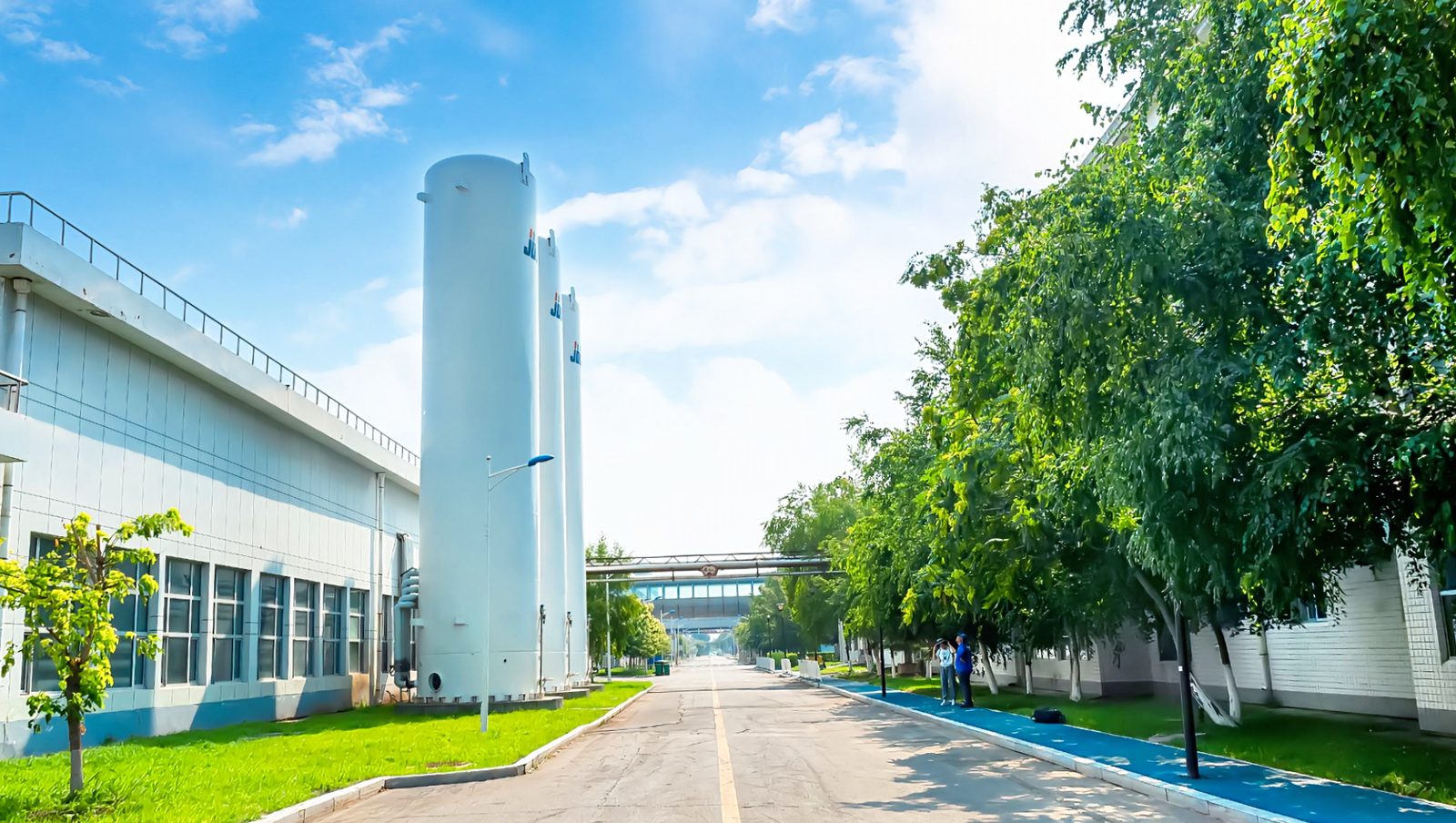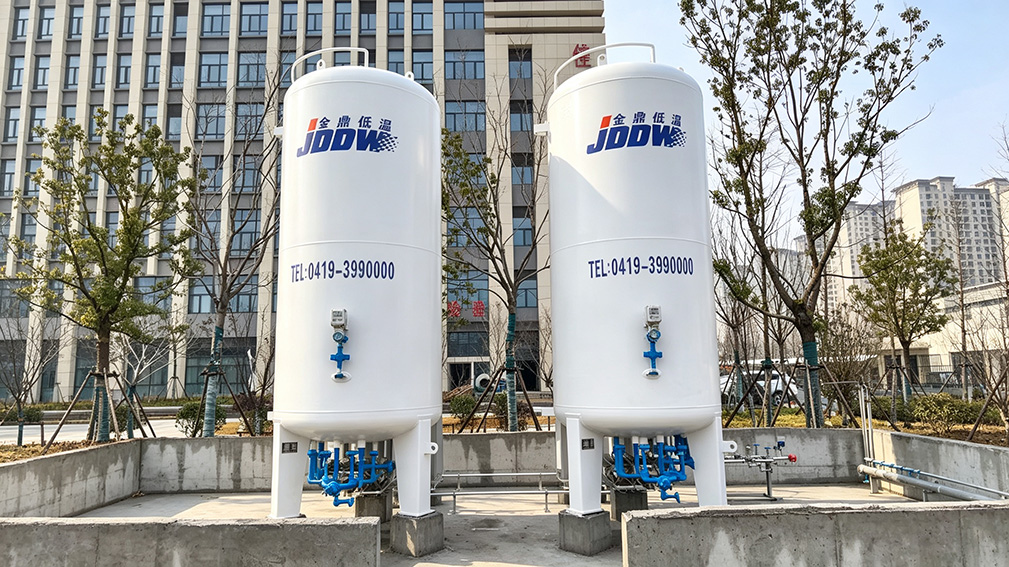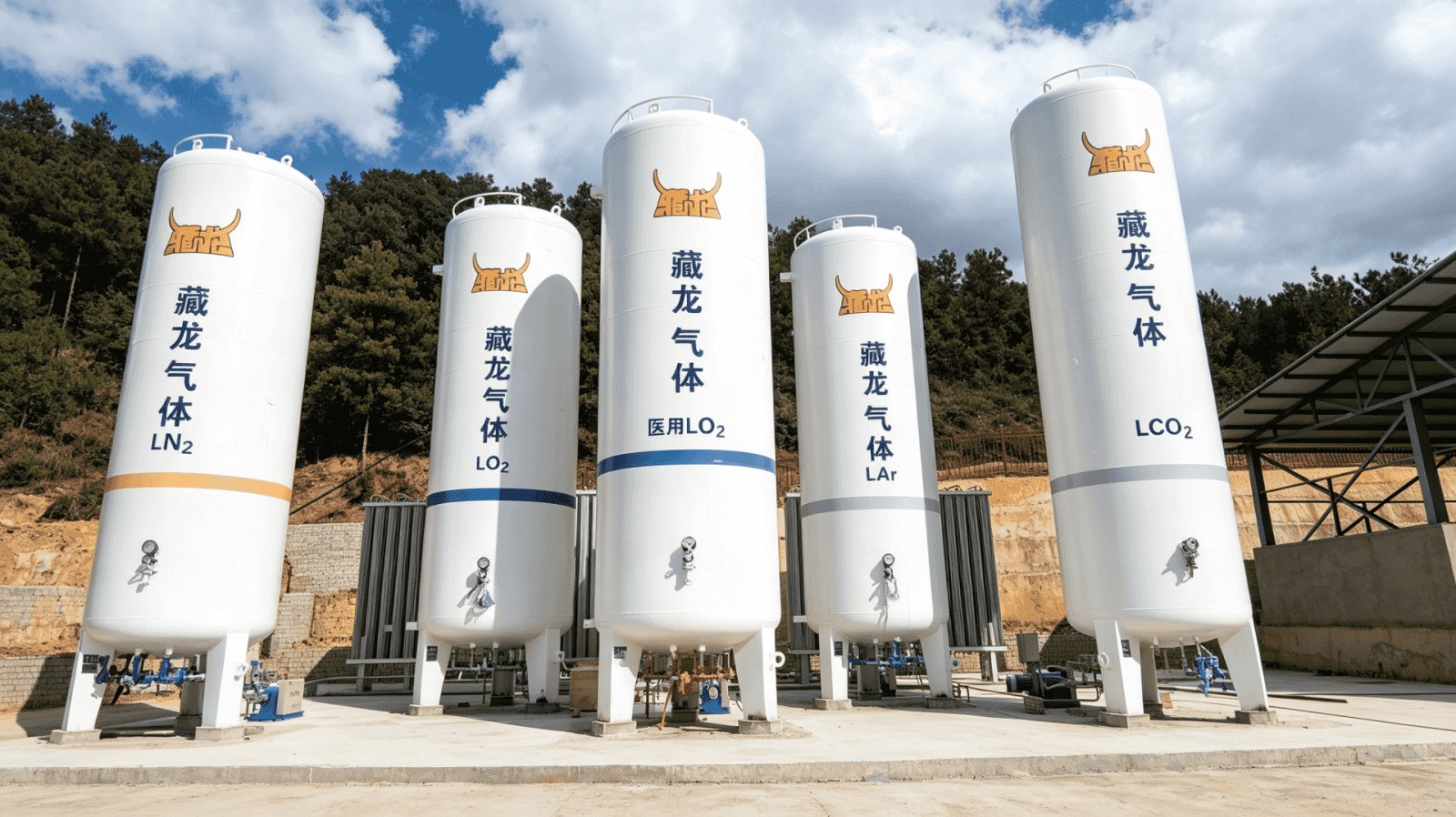
Liaoyang Jinding Cryogenic Equipment Co., Ltd. specializes in the research, development, and manufacturing of cryogenic liquid storage and transportation equipment. Its main products include Cryogenic Storage Tanks, Vaporizers, and Pressure Reducing Devices, which are widely used in industries such as Metallurgy, Chemical Industry, Medical, and Food Industry.
The Cryogenic Storage Tank is a key Pressure Vessel for storing Cryogenic Liquids such as liquid oxygen, liquid nitrogen, and LNG, and is widely used in industries such as Metallurgy, electronics, Medical, and energy. With the continuous growth of Industrial Gas demand, the insulation performance, safety configuration, and system integration capability of Cryogenic Storage Tanks directly affect the quality of end-use gas and operating costs. This article discusses the technical composition and typical applications of Cryogenic Storage Tanks, providing a reference for equipment selection and system design in related industries.
Cryogenic Storage Tanks typically adopt a double-layer cylindrical structure: the inner tank is made of austenitic stainless steel to withstand cryogenic conditions, while the outer tank is made of carbon steel to bear the load and protect the insulation layer; the interlayer is filled with perlite or adopts a high-vacuum multi-layer insulation process to effectively suppress the intrusion of external heat. Taking the Liquid Nitrogen Storage Tank as an example, its operating temperature can reach -196°C, and the static daily evaporation rate is an important indicator for measuring insulation performance. In addition, the storage tank must be equipped with Safety valves, rupture discs, Pressure Reducing Devices, as well as Level Gauges and pressure monitoring instruments, forming a complete safety assurance system to ensure timely pressure relief and regulation under overpressure conditions.
Cryogenic Liquids must be converted into ambient-temperature gas by a Vaporizer before they can be supplied to end users. The Ambient Air Vaporizer relies on natural air convection for heat exchange, featuring a simple structure and economical operation; in applications with large gas consumption and high requirements for continuous gas supply, the water bath vaporizer performs heat exchange by heating water with electricity or steam, offering a smooth vaporization process and a stable outlet temperature that is unaffected by ambient temperature fluctuations, making it a reliable choice for central gas supply systems. The vaporized gas is adjusted by the Pressure Reducing Device to the working pressure required by users, and then delivered through Pipelines to each gas consumption point. The vaporization capacity and pressure regulation accuracy must be matched with the tank evaporation rate and the gas consumption load to ensure pressure stability and operational safety of the entire gas supply system.
In terms of liquid oxygen applications, fields such as oxygen-enriched smelting in Metallurgy, metal cutting and welding, and sewage treatment aeration all rely on stable liquid oxygen storage and supply systems, and the centralized oxygen supply of medical institutions also uses the Liquid Oxygen Storage Tank as its core gas source. The applications of liquid nitrogen are even more diverse: in the electronics industry, cryogenic testing environments are of great significance for product quality verification; electronic component testing uses liquid nitrogen to create controlled cryogenic conditions to examine the electrical performance and reliability of components under extreme temperatures; in the field of machinery manufacturing, cryogenic metal assembly uses liquid nitrogen to shrink shaft parts before assembling them with hole parts to achieve a firm interference fit, and cryogenic treatment can also improve the dimensional stability and wear resistance of metal materials.
As a clean and efficient form of energy, LNG also relies on Cryogenic Storage Tank technology for its storage. LNG storage tanks must meet cryogenic conditions of -162°C, which places higher demands on the insulation structure and boil-off gas (BOG) management. In scenarios such as city gas peak shaving, industrial fuel supply, and regional gasification stations, the integrated configuration of Cryogenic Storage Tanks and vaporization and pressure regulation equipment constitutes the basic unit of the LNG supply system, providing equipment support for the efficient utilization of natural gas resources.
Cryogenic Storage Tank technology is the key link connecting cryogenic liquid storage and end applications; its insulation design, safety configuration, and the coordinated performance of the vaporization and pressure reduction systems determine the reliability and economy of the entire gas supply system. Liaoyang Jinding Cryogenic Equipment Co., Ltd. is rooted in the field of cryogenic equipment manufacturing and continuously improves its technical solutions for Cryogenic Storage Tanks, Vaporizers, and supporting equipment, providing stable and reliable cryogenic gas supply for users in industries such as electronics, Metallurgy, and energy.